
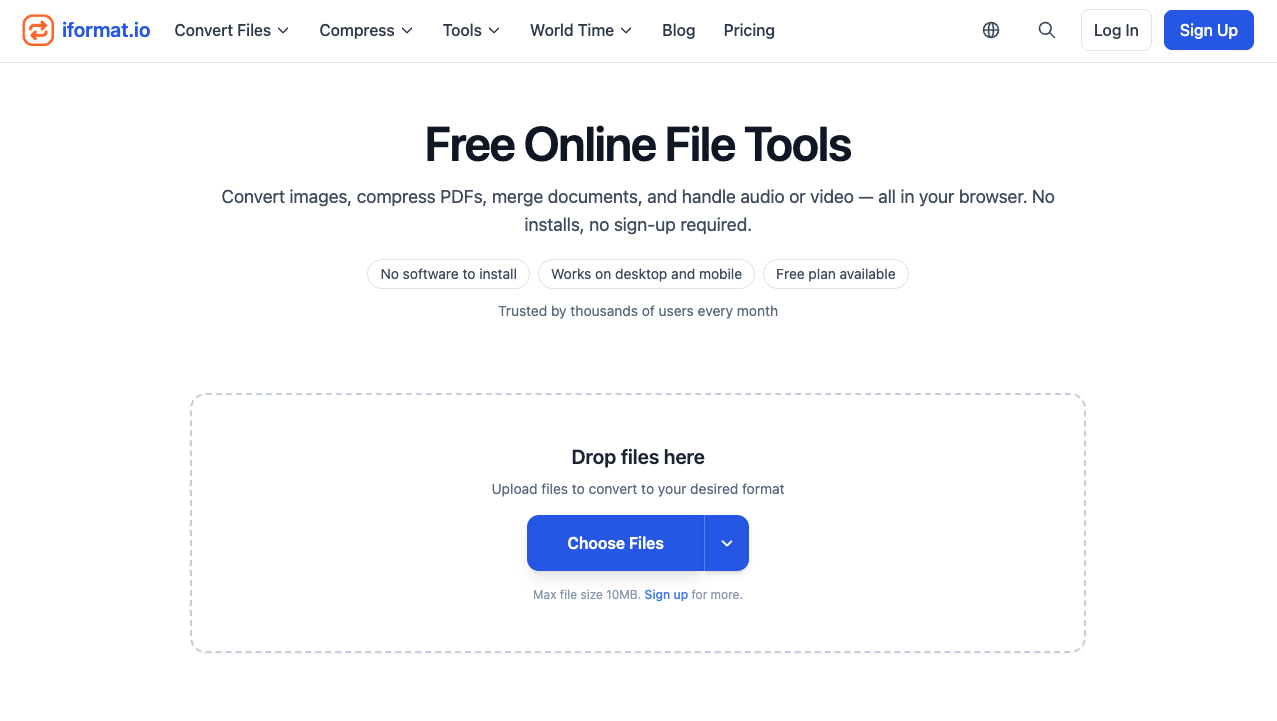
At iFormat.io, the goal has always been simple: build fast, reliable, and privacy-friendly tools for file conversion, compression, and everyday utilities. What started as a focused product has gradually evolved into a global platform serving users across multiple countries and use cases.
Hi, I am Pavan Kumar Polineni. As a solo founder, scaling this kind of platform comes with a unique challenge — making the right decisions quickly, without being overwhelmed by complex tools or unnecessary data. I needed an analytics solution that could give me clarity, not noise. That’s where Pirsch Analytics became an essential part of the journey.
Understanding Growth Without Complexity
As iFormat.io began expanding across categories like file conversion, compression tools, and time utilities, traffic started to grow steadily. With projections moving toward 200K–500K monthly page views, it became critical to understand what was actually driving this growth.
I wasn’t just looking for numbers — I wanted to understand which pages were bringing users in, how they interacted with different tools, and where they were dropping off. Traditional analytics platforms often made this harder than it needed to be. Pirsch, on the other hand, offered a clean and focused view of exactly what mattered.
Discovering What Truly Works
One of the biggest shifts came from identifying which pages were actually contributing to growth. Instead of spreading efforts thin across hundreds of pages, Pirsch helped highlight a small set of high-performing pages that consistently brought in traffic.
This changed how I approached SEO and product development. Rather than guessing or following generic strategies, I started doubling down on what was already working — improving those pages, strengthening internal links, and building closely related tools around proven demand.
Improving User Journey and Conversions
Another major improvement came from understanding how users moved through the platform. A typical journey would start with a search query, land on a specific tool or blog page, and then move into actual usage — uploading, converting, and sometimes exploring additional tools.
By observing these flows in Pirsch, I was able to identify friction points and simplify the experience. Small improvements, like better linking between related tools or reducing unnecessary steps, had a noticeable impact on engagement and conversions.
Expanding Beyond English Markets
One of the most valuable insights came from geographic data. Pirsch clearly showed that a significant portion of traffic was coming from countries where English was not the primary language.
Instead of treating this as secondary traffic, I saw it as an opportunity. This led to the introduction of language-based pages and country-specific URLs tailored to local users. By aligning content with regional demand, iFormat.io was able to improve both visibility and engagement in global markets.
For example, pages like jpg to pdf were created specifically to serve Spanish-speaking users.
Building with Privacy in Mind
As a platform that handles file uploads, user trust is extremely important. Using a privacy-first analytics tool like Pirsch ensures that growth does not come at the cost of user data.
With no cookies and no invasive tracking, Pirsch aligns perfectly with the philosophy behind iFormat.io — keeping things simple, transparent, and user-friendly.
The Result: Growth with Clarity
Today, Pirsch plays a key role. It provides just the right level of insight needed to make confident decisions — whether it’s improving SEO, optimizing user journeys, or expanding into new markets.
For solo founders and small teams, having this kind of clarity is invaluable. Instead of getting lost in dashboards, the focus stays where it should be — on building, improving, and scaling the product.